English N+1
An offline AI English tutor that generates material just slightly above your CEFR level.
Offline after setup
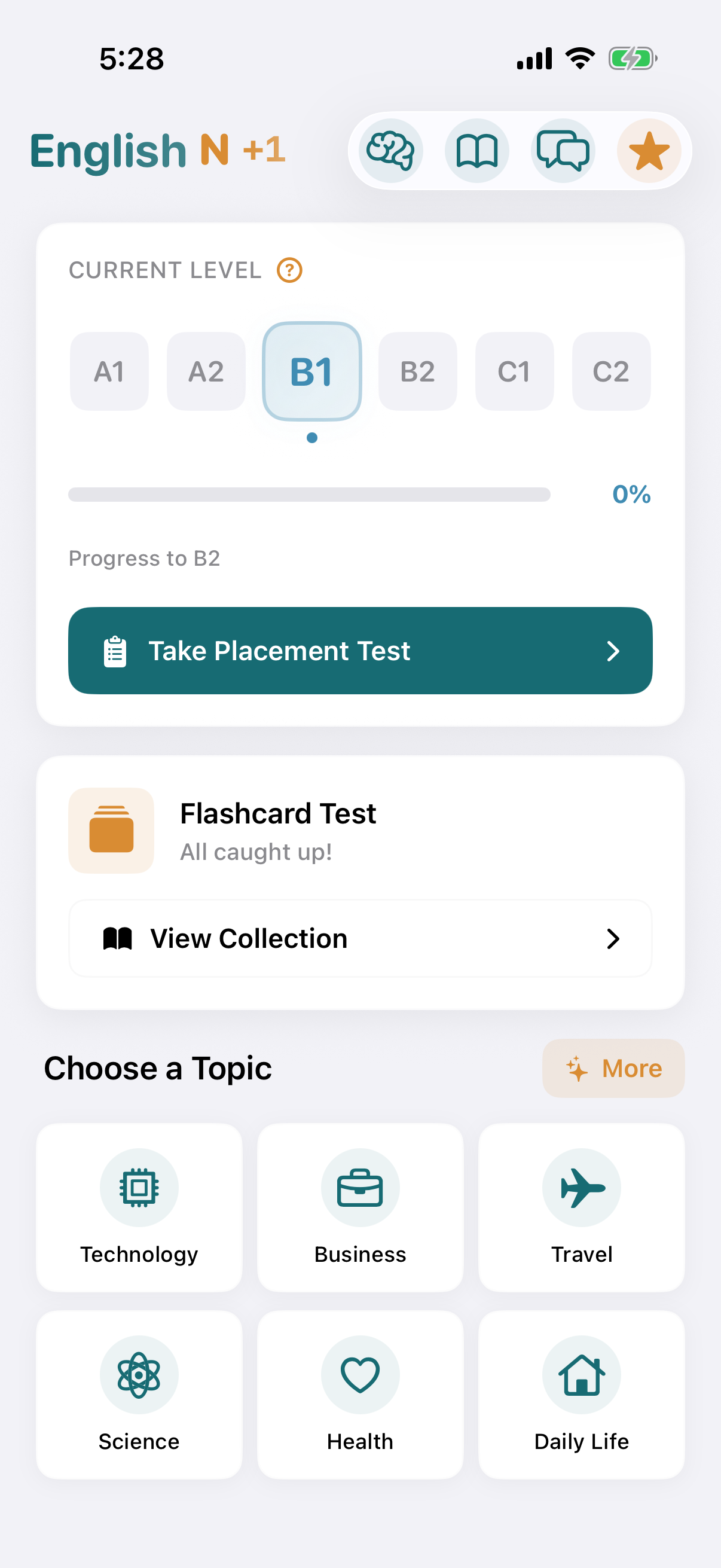
Built on Krashen's i+1 theory, English N+1 combines on-device AI with CEFR grading to deliver reading and review material that truly fits your current level.
The usual problem is poorly-fitted material, not lack of effort#
The hardest part of learning English is rarely vocabulary size. It’s opening an article and having no idea whether it’ll be comfortably challenging or discouragingly hard. Material that’s too easy gives no sense of progress; material that’s too hard simply erodes patience. English N+1 was built for that specific gap.
It turns Krashen’s i+1 theory into a working product: estimate your level first, then have AI generate content just above your current ability. The point isn’t “bolt AI onto a study app”; it’s automating the work of making material fit the person.
How you’d actually use it#
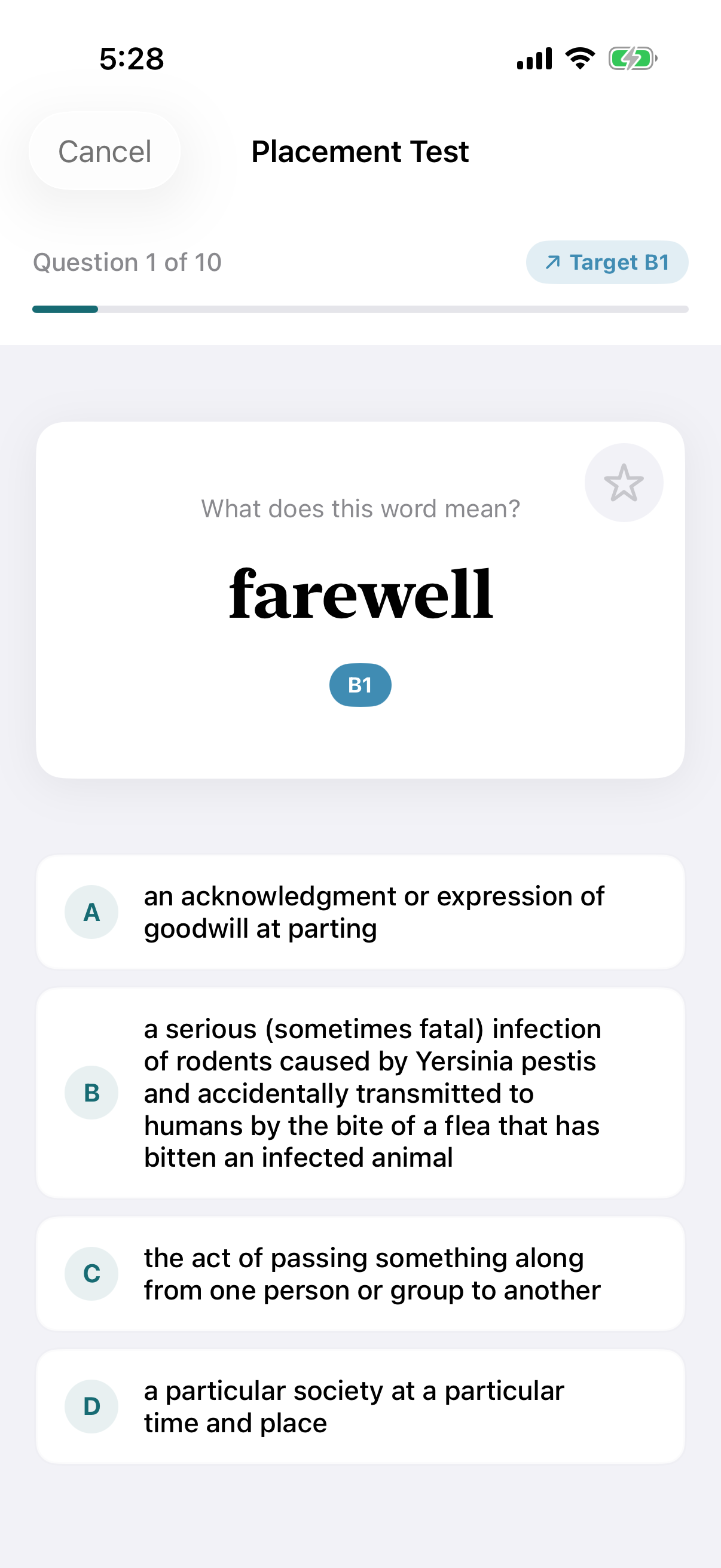
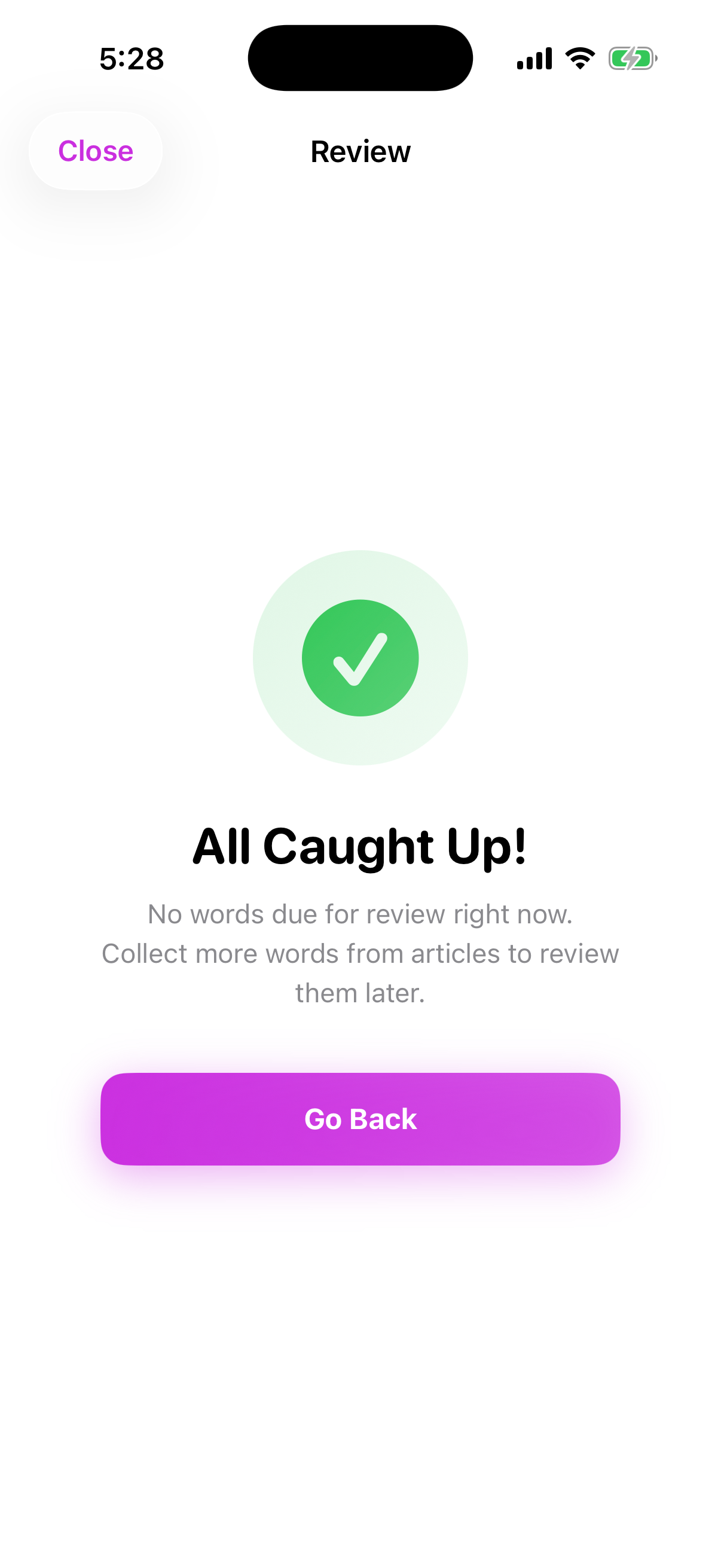
A common flow: take the placement test to locate your rough CEFR range, pick a topic you actually want to read about, and let the app generate an article at your level. Save unfamiliar words as you go, and they enter a review cadence automatically. You don’t need to separately hunt for articles, run dictionary lookups, take notes, and then wire up flashcards; the app was designed around that whole habit from the start.
This matters especially for people anxious about English. Instead of opening by asking you to prove what you know, it lets you expand your boundaries while still understanding most of what’s in front of you. That “only slightly harder than where I am now” margin is where most people can actually sustain practice.
AI here is an engine, not a performance#
Plenty of AI English products highlight how natural their chat is. What actually keeps learners around is whether content generation quality is consistent and whether the review rhythm flows. English N+1 behaves like a curriculum engine that tracks your level, balancing text difficulty, vocabulary density, and topic interest so you don’t gamble on “maybe this one fits” every session.
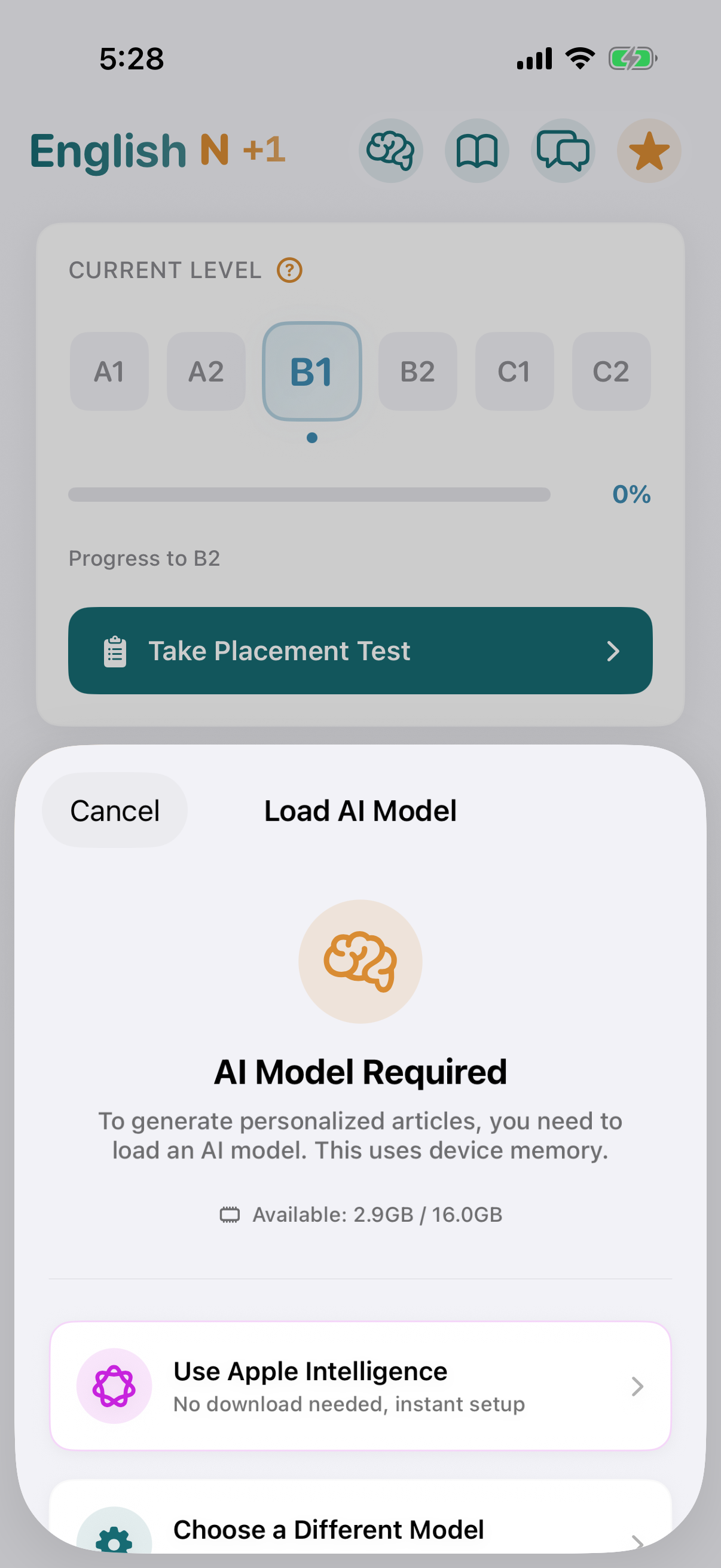
Running the model on-device matters too. Learning records, level information, and reading preferences are private, and especially sensitive when you’re looking at your own weaknesses. Keeping this data local makes long-term use much more comfortable than a cloud service.
Model selection isn’t pushed in your face either. The placement test establishes your rough CEFR range, and a local model takes over generation based on your device’s capability and memory state. What you experience is “open the app and start reading” rather than being blocked by setup. Hardware-adaptive under the hood, simple on the surface. That proves more useful than showcasing AI for its own sake.
Who should download it#
If flashy English apps that never quite fit have left you worn out, this one works differently. It earns retention by being useful every time you open it, not through streaks or gamified loops. Students, self-learners, people returning to English, or anyone who wants a steady dose of reading during the commute will find this more structured than scraping the web for material.
People usually give up on English not from lack of effort, but because the material doesn’t fit. English N+1 only tries to fix that one thing — so the next time you open an article, you don’t have to guess whether it’s about to break your patience.
Quick Links
Head straight to the store, or read the support and privacy pages first.
Core Features
Screenshots